

PORTO CITY
CITY OF MULTIPLE CONTRASTS
CITY OF MULTIPLE CONTRASTS
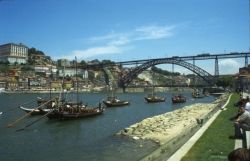 «Under gathered and revolt darkness... a strange and unmeasured, solid and splendid city, a city that at the same time scares, and that, if it isn’t the most beautiful, it is most original that I know in the world». This description was written in 1923 by writer Raul Brandão, still actual nowadays. Porto remains as much pretty as mysterious, as much festive as dark, as much hospitable as discrete, as much monumental as popular, as much scary as splendid. And it is in these incoherencies that lies its enormous power of seduction.
Porto’s fascination is manifest in the great mosaic of urban typologies, historic accounts, visual references and event senses and idiosyncrasies that the city encloses in its perimeter. There isn’t one Porto but various and equally seductive. And all this because, since the Middle Ages until our days, the city has always known – with more or less splendour – how to be the active centre of attention of the History of its country, Europe and the world. Porto gave name to Portugal and also to one of the world’s most famous wines.
It was birthplace of Infante D. Henrique, the Navigator, father of the Portuguese Discovery era. Porto was an important merchant metropolis between the 15th and 18th centuries; it was a baroque art centre, bastion of liberalism and home city to an important English colony; it was the centre of the early Portuguese culture, industrial force of the region and World Heritage since 1996, having been the European Culture Capitol in 2001.
It is in this historic path – rich and varied – that the city create a peculiar and marked personality. This personality is shown in the city’s architecture, in its cultural and artistic manifestations, its political centre role and sociological characteristics of its people.
Porto is the second largest Portuguese city and the capital of the Northern region of the country. Its population is approximately 350 thousand inhabitants, although the metropolitan area already has 1.6 million. Despite is strong connection to Portuguese and world history, the city has known how to modernize itself in social and economic, as well as cultural and scientific domains. But sports are also a reason of prestige for the city for the numerous feats of its world renowned football club and also of the athletes of its University.